
Why the Question Keeps Coming Up: What People Really Mean When They Ask About “Joining”
“How to join the Illuminati” has become one of the most searched, most messaged, and most monetized questions on the internet. In Jamaica, as elsewhere, the question usually does not come from a textbook interest in European history. It comes from something more immediate: a desire for opportunity, protection, influence, or an explanation for why some people rise quickly while others struggle. It also comes from fear—fear that hidden groups control careers, politics, wealth, or even culture.
To address the question responsibly, you have to separate three different things that get blended together online: the documented historical organization known as the Bavarian Illuminati; modern fraternal or private associations that are legal and openly described; and internet mythology that uses the word Illuminati as a shortcut for “secret power.” When someone says I want to join, they may be asking for a path to success, a network, a sense of belonging, or a way out of hardship. The tragedy is that scammers understand those motivations and target them directly.
illuminati in jamaica: What Jamaica’s History and Records Actually Show (and What They Don’t)
When people say illuminati in Jamaica they often imagine a locally organized branch with recruiters, initiation ceremonies, and a membership list. Credible historical evidence does not support that picture.
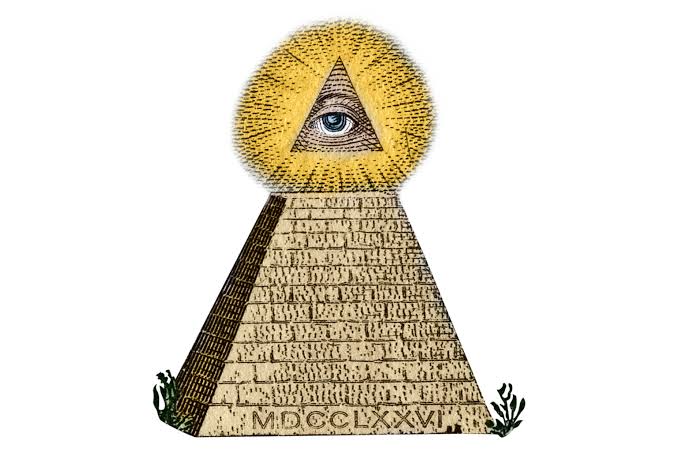
The original Illuminati most people reference was the Bavarian Illuminati, founded in 1776 in what is now Germany. It was a small Enlightenment-era group with political and philosophical aims, operating in a specific time, place, and social context. It was suppressed and outlawed in the 1780s, and mainstream historians do not treat it as an organization that continued in a direct, centralized way into modern times. That does not mean secret groups never existed anywhere; it means the leap from “an 18th-century European group existed” to “a global organization is recruiting Jamaicans today” is not supported by documented continuity.
So what does Jamaica have, historically and presently? Like many societies shaped by colonialism and migration, Jamaica has a history of churches, community lodges, benevolent societies, professional associations, political parties, and private clubs—some public, some selective, some ceremonial, many focused on mutual aid, social status, or networking. These can look “secretive” to outsiders because they have private meetings, membership rules, and internal traditions. But that is not the same as proof of a hidden, world-controlling “Illuminati” structure.
It is also important to understand how symbols travel. Jamaica, as a cultural powerhouse, exchanges music, fashion, and internet culture with the wider world. When global memes about triangles, eyes, hand signs, or coded messages flood social media, they inevitably get interpreted through local experiences. The result is a sense that “it must be here too.” But a feeling is not a record, and a viral clip is not a reliable archive.
From the Bavarian Illuminati to Internet “Illuminati”: How a Historical Footnote Became a Global Myth
Understanding the shift from history to myth makes the modern question much easier to evaluate. The original Bavarian Illuminati emerged during the Enlightenment, when political ideas, religious authority, and social hierarchy were being challenged across Europe. The group’s reputation—partly real, partly exaggerated—quickly attracted rumors. Their suppression fueled an even bigger story: if they were outlawed, perhaps they went underground; if they were secret, perhaps they were everywhere.
Over centuries, writers, propagandists, and conspiracy entrepreneurs layered new claims onto the old name. In the modern era, internet platforms accelerated the process. A rumor that once took years to circulate can now reach millions overnight. A single image or lyric can be interpreted and reinterpreted endlessly, detached from context, and presented as “proof” through sheer repetition.
Crucially, the modern “Illuminati” story is not one story. It is an umbrella label. Sometimes it means “wealthy elites.” Sometimes it means “the entertainment industry.” Sometimes it means “foreign influence.” Sometimes it is used as a religious warning. Sometimes it is a metaphor for corruption. That flexibility is exactly why it spreads: it can be shaped to fit almost any fear or frustration.
jamaica illuminati myths: The Most Common Claims, and the Simple Tests That Expose Them
To discuss “jamaica illuminati myths” clearly, it helps to focus on patterns. The myths typically share a few repeated claims: there is a local recruiter; there is an initiation involving money, secrecy, or harm; there is a promise of instant success; there is a threat of punishment if you talk; and there are “symbols” in music videos or social media that supposedly confirm membership.
Here is the reality-based way to test these claims without needing to “debate” anyone:
First, ask what would count as reliable evidence. A screenshot of a direct message is not reliable, because it is easy to fake and impossible to verify without independent confirmation. A rumor about a celebrity is not reliable, because fame attracts gossip and financial incentives for sensational stories. A montage of triangles and eyes is not reliable, because those shapes exist everywhere in design, religion, and branding. Even a person claiming “I joined” is not automatically reliable, because people lie for attention, for money, or to build a scary persona.
Second, examine incentives. Who benefits if you believe the myth? Scammers benefit when you pay fees. Content creators benefit when you watch, share, and argue. Some people benefit socially when they can label rivals as “dark” or “controlled.” The myth spreads because it rewards the people who push it.
Third, look for the money trail. Many “Illuminati” approaches end with a demand: a registration fee, a “donation,” a “seed,” a “processing cost,” or money for travel to a meeting that never happens. If the path to “membership” is mainly payments and secrecy, you are not being recruited into power; you are being recruited into a scam.
join illuminati jamaica: The Direct Answer, the Honest Answer, and the Safe Answer
If “join illuminati jamaica” means “How do I become part of a real, documented organization that is actually the historical Illuminati and is operating openly today?”—there is no credible pathway, because there is no credible evidence that such an organization exists as an accessible, verifiable membership body in Jamaica.
If “join illuminati jamaica” means “How do I get wealth, influence, connections, or protection quickly?”—that goal is understandable, but the safest and most effective routes do not involve secret recruiters. They involve skills, relationships, credibility, and time. They also involve avoiding decisions that can destroy your reputation, finances, or legal standing.
If “join illuminati jamaica” means “How do I confirm whether a person contacting me is legitimate?”—the safe answer is: treat any unsolicited “Illuminati” recruitment as fraudulent until proven otherwise. And “proven otherwise” is a high bar, because scammers exploit secrecy to prevent verification.
In practical terms, if someone offers membership in exchange for money, personal documents, intimate photos, or private meetings, your best move is to disengage. Do not negotiate. Do not send “just a small amount.” Do not try to test them. You are not dealing with a mysterious power; you are likely dealing with a person running a script that has worked on others before.
Why “Membership” Claims Thrive Online in Jamaica: Social Pressure, Visibility, and the Economics of Hope
Jamaica’s online environment is intensely social. Rumors move fast because communities are close, and social media collapses distance between local neighborhoods and global celebrity culture. When people see sudden success—new cars, international travel, luxury fashion—many assume there must be a hidden mechanism behind it.
Economic pressure also matters. When legitimate paths feel slow or blocked, shortcuts become more tempting. Scammers weaponize that reality. They do not need you to believe a full conspiracy; they only need you to believe “maybe,” long enough to send money or personal information.
There is also a cultural factor: Jamaica is a place of strong storytelling traditions, sharp commentary, and intense competition for visibility in music, business, and social life. Stories about hidden sponsors, powerful “backers,” and secret deals fit neatly into that landscape. They offer a dramatic explanation for outcomes that are often explained more plainly by marketing budgets, industry networks, management decisions, and sheer persistence.
How Scams Work in Practice: The Common “Recruitment” Script and Why It Is Designed to Trap You
Most fake “Illuminati recruiter” messages follow predictable steps. The message may praise you, tell you you are “chosen,” or claim they saw your talent online. It may promise fame, wealth, protection, or special knowledge. Then it introduces urgency: act now, keep it secret, do not tell your family, do not consult your pastor, do not ask too many questions. Finally, it requests money or personal material.
These scripts are effective because they mix flattery and fear. The flattery makes you feel seen. The secrecy makes you feel special. The urgency blocks careful thinking. The fear of missing out keeps you engaged. And once you pay once, many people pay again to avoid admitting they were tricked.
In Jamaica, another risk is reputational damage. Even being associated with the rumor can affect how employers, churches, schools, and families perceive you. Scammers may threaten to expose conversations or edit screenshots to make you look involved. That is why prevention matters more than winning an argument with a stranger online.
Symbols, Music Videos, and Misread “Proof”: How Pattern-Seeking Turns Art into Allegations
One reason “Illuminati” claims spread is that the human brain is excellent at pattern recognition. We notice repeated shapes, gestures, numbers, and themes. In art and marketing, repetition is intentional: it creates branding. In religion, symbols carry meaning. In politics, imagery signals identity. In the internet conspiracy world, the same human habit becomes a trap: everything becomes “a sign.”
Music and entertainment add fuel because they are built to provoke emotion and conversation. A dramatic visual in a video, a theatrical outfit, a lyric about power, or a pose at an awards show can be clipped and turned into “evidence.” The clip then circulates without context, and the audience fills the gaps with assumptions. That is not investigation; it is storytelling.
In Jamaica’s creative industries, adopting global visual language does not equal membership in a secret society. It often reflects influence, trend adoption, or an attempt to look international. Accusing people based on aesthetics is a shortcut that punishes creativity and rewards paranoia.
What Credible Sources Do—and Don’t—Support: A Simple Standard for Truth
If you want a clear standard, use this: credible claims should be supported by evidence that can be checked by independent sources. In practice, that means official documents, reputable academic history, reliable journalism with named sources, and verifiable records. It does not mean anonymous “insider” posts, reaction videos, or chain messages.
Credible sources support the existence of the historical Bavarian Illuminati and their suppression. They support the reality that secretive or private groups can exist in many societies. They support that corruption and elite influence can occur in politics and business. None of that automatically supports the popular online claim: that there is a modern “Illuminati” organization with a recruitment pipeline in Jamaica that grants success in exchange for initiation payments or harmful acts.
Think Clearly Before You Risk Money, Safety, or Reputation: A Practical Decision Filter
If you are facing a real situation someone contacted you, a friend is pressuring you, or a rumor is spreading clarity matters more than curiosity. Ask yourself a few grounded questions.
What exactly is being offered, in plain language? If the offer cannot be stated plainly without mystical fog, it is likely manipulation.
What do they want from you right now? If the next step is payment, secrecy, or personal material, that is a flashing warning sign.
Can you verify their identity through normal means? Scammers often hide behind fake names, stolen photos, or “official” looking pages that are not official at all.
What is the downside if you are wrong? Losing money hurts. Losing privacy can be worse. Losing your reputation can take years to repair. If the downside is severe, the burden of proof should be extremely high.
Digital Safety in Jamaica: How to Respond If You’re Contacted by a “Recruiter”
If you receive messages claiming to recruit you, treat it like any other high-risk online approach. Do not send money. Do not send copies of your identification. Do not share your address. Do not share private photos. Do not move the conversation to platforms where messages disappear unless you are trying to preserve evidence; disappearing messages help scammers.
Save screenshots and usernames. If threats are made, take them seriously as harassment or extortion rather than mysticism. Consider reporting the account on the platform. If you have been defrauded or blackmailed, consider contacting local authorities and a trusted legal professional for guidance. Even when the scammer is overseas, reporting can still matter, because patterns help platforms and investigators act.
If you already sent money, do not spiral into shame. Shame is what keeps people silent and allows scams to continue. Focus on damage control: stop payments, preserve evidence, inform your bank or payment provider promptly, and tighten your privacy settings. Tell someone you trust so you are not handling pressure alone.
The Real “Network” Many People Want: Legitimate Ways to Build Power Without Secret Societies
Underneath the Illuminati question is often a real need: you want connection, mentorship, funding, and a path to achieve goals. Those needs are valid. The solution is to pursue legitimate networks that do not require secrecy, fear, or payments to unknown individuals.
In Jamaica, this can look like building professional credibility through training, apprenticeships, and certifications; joining recognized industry groups; participating in local business communities; volunteering with established organizations; and working with transparent mentors who can be checked by reputation and track record. Success is rarely magical. It is often boring: showing up, improving, meeting people, and keeping your word.
If you are in music, business, sports, or online content, you can build real leverage through contracts you understand, advisors with verifiable experience, and relationships based on mutual benefit rather than intimidation. If someone offers you “instant access” with no clear mechanism, be cautious. Real opportunity usually comes with clear terms, visible stakeholders, and a paper trail.
Religion, Fear, and Rumor: Handling Accusations Without Losing Your Peace
In a society where faith is important for many families, “Illuminati” rumors can quickly become moral accusations. People may accuse others to explain tragedy, jealousy, or unexpected success. If you are targeted by such rumors, the goal is to respond in a way that protects your dignity rather than escalating the drama.
It helps to distinguish between two situations: people who are genuinely afraid, and people who are using the accusation as a weapon. With fear-driven people, calm clarity can help. With weapon-driven people, boundaries matter more than explanations. You do not owe your entire life story to someone committed to misunderstanding you.
Protect your reputation through consistency. Keep your personal conduct aligned with your values. Avoid online battles that create more screenshots for rumor mills. If the rumor affects work or community standing, address it directly with the relevant decision-makers in a sober, factual way rather than trying to “win” public opinion on social media.
What to Teach Teenagers and Young Adults: Curiosity Is Normal, but Verification Is a Life Skill
Young people are heavily exposed to viral conspiracy content, especially content that mixes celebrity culture, money, and shock value. Telling them “don’t watch” often backfires. A better approach is to teach verification as a skill: how to check sources, how to recognize manipulation tactics, and how to pause before reacting emotionally.
Explain how algorithms work: platforms show content that keeps you watching, not content that is true. Explain how scammers copy official-looking logos and language. Explain the psychology of being “chosen,” and why it feels powerful. Then anchor them in reality: no legitimate opportunity requires secrecy from your family, rapid payments to strangers, or threats.
If a teenager says they were contacted by a “recruiter,” treat it seriously, not dramatically. Make it safe for them to show you the messages without punishment. That supportive response is one of the strongest protections against exploitation.
illuminati in jamaica: A Clear Conclusion for Anyone Still Unsure
To bring “illuminati in jamaica” back to a clear conclusion: the historical Illuminati was a specific European group in a specific era. The modern internet version is a flexible myth that thrives because it is emotionally compelling, socially contagious, and financially useful to scammers and content creators. Jamaica, like any country, has private networks and real inequalities—but that is not the same as a recruitable Illuminati organization operating locally.
If someone tries to sell you membership, they are almost certainly selling you a story. If someone threatens you, treat it as harassment or extortion and respond with practical safety steps, not mystical fear. If you want influence and opportunity, pursue transparent networks, real skills, and relationships that stand up in daylight.
join illuminati jamaica: The Final Word—Choose Evidence, Choose Safety, Choose Reality
The most responsible answer to “join illuminati jamaica” is not a set of steps to follow, because there is no credible, verifiable “membership” path that matches the online fantasy. The steps that do exist—paying fees, sending documents, keeping secrets, meeting strangers—are steps into vulnerability.
Choose evidence over vibes. Choose verification over virality. Choose safety over shortcuts. And if what you truly want is community, mentorship, and a better future, pursue it through legitimate paths that strengthen your life instead of putting it at risk.
jamaica illuminati myths: If You Take Only One Lesson, Let It Be This
“jamaica illuminati myths” survive because they offer simple answers to complex realities. They turn slow success into “secret sponsorship,” turn inequality into “hidden control,” and turn fear into entertainment. But your life is not entertainment for a scammer, and your future should not be gambled on a rumor.
If a claim demands your money, your silence, and your fear, it is not offering you power. It is taking it from you. Keep your decisions grounded, your boundaries firm, and your focus on real-world steps that build a stable name, stable income, and stable relationships.
